TruGraf Liver, the first and only gene expression diagnostic that helps optimise immunosuppression treatment for liver transplant patients
Michael Borgenicht, Product Marketing Manager, Eurofins Transplant Genomics, michaelborgenicht@eurofins-tgi.com

For patients awaiting an organ transplant, once they have the surgical procedure required to obtain a new organ, their transplant journey is just beginning. Immunosuppressant drugs are prescribed to these patients to prevent their body’s immune system from rejecting the new organ and preserve its function.
However, immunosuppressant drugs come with significant complications. While the drugs prevent the immune system from attacking the new organ, they also block the immune system from being able to fight threats like viruses, bacteria, and fungi. Clinicians walk a delicate line balancing the benefits of immunosuppression against the negative side effects they come with. Until now, optimising immunosuppressant therapy for liver transplant recipients has largely been a “trial and error” process. Clinicians rely primarily on their experience, in addition to laboratory and clinical indicators of rejection and graft injury, resulting from the effects of immune activation.
TruGraf® Liver, from Eurofins Transplant Genomics, is a blood-based mRNA gene expression test that provides guidance for the optimisation of immunosuppression therapy in liver transplant recipients. TruGraf Liver represents the first diagnostic tool that leverages gene expression data – powered by Eurofins Transplant Genomics’ proprietary technology and machine learning – to give the earliest and most accurate view of immune quiescence.
Gene expression is a basic, biological process that is utilised by all known life to generate required macromolecular instruments. It is a small part of the flow of genetic information within the body. By examining the mRNA generated through gene expression, insight can be gained into the status of a patient’s immune system.
TruGraf Liver is the first and only blood-based test that offers biomarker guidance to aid physicians in optimising immunosuppression in transplant recipients, to allow for a superior balance between graft rejection and adverse events. TruGraf Liver can help clinicians confirm immune quiescence during immunosuppression optimisation in patients with stable graft function, minimising the risk of overt graft injury due to rejection. For more information, visit: www.transplantgenomics.com/
TEM is the ideal complement to in-vitro assays and molecular techniques in determining the microbiological safety of biological products
Lara Strittmatter, PhD, Electron Microscopy Laboratory Manager, Eurofins BioPharma Product Testing, LaraStrittmatter@eurofinsUS.com

Transmission Electron Microscopy (TEM) is a powerful tool in the biopharmaceutical industry, allowing for high-resolution imaging of microscopic structures at the nanometre scale. This technique utilises a beam of electrons that passes through a thin section of a specimen, producing detailed images of the internal structure of the sample. With the ability to magnify samples up to one million times while maintaining every detail, TEM is capable of directly imaging viruses as small as 20-400 nanometres.
One of the key advantages of TEM is its unbiased nature, making it an ideal complement to in-vitro assays and molecular techniques in determining the microbiological safety of biological products. For example, Eurofins can assist clients in characterising cell lines by examining the structural integrity of cells and observing the expression of endogenous retroviral particles present in CHO (Chinese Hamster Ovary) cell lines. Additionally, TEM can be used to enumerate endogenous and viral-like particles in unprocessed bulk from bioreactors, uncovering the presence of any extraneous agents that could have contaminated the cells.
In the expanding field of cell and gene therapy, the production of viral vectors is a crucial aspect of the manufacturing process. The Eurofins Electron Microscopy laboratory can aid in evaluating the size, shape, and purity of viral particles, as well as assessing their capsid content (full vs. empty).
TEM provides scientists with the ability to visualise the morphology of pathogens and contaminants, identifying potential risks associated with the production of biological therapeutics, ultimately leading to the production of safe and effective products for patients. For more information, visit: www.eurofins.com/biopharma-services/product-testing/services-by-modality/gene-therapy-testing-services/
Ensuring consumer safety and regulatory compliance for OTC drugs, cosmetic products, and dietary supplements
Laurianne Kandalaft, Eurofins Assurance, lauriannekandalaft@eurofins.com

Ensuring consumer safety and regulatory compliance is a constant and key requirement for retailers and manufacturers of healthcare products all over the world. Safety and regulatory risks are mitigated thanks to regular audits of sites, which sometimes leads to a high burden for suppliers and manufacturers, who can have several dozen audits to handle each year.
Trying to address this complexity, several retailers, manufacturers, key industry associations, and regulatory bodies have united in order to form the Global Retailer and Manufacturing Alliance (GRMA) in 2014.
GRMA’s aim is to enhance consistency and harmonisation across quality management systems of the dietary supplement, cosmetic, and over-the-counter (OTC) drug industries. For this, the alliance brings together the requirements of top retailers, manufacturers, and industry associations under one unique standard. The result is a GRMA certification programme, using a single, publicly accredited GMP standard, and covering three health and wellness product categories, which are: OTC drugs, cosmetics, and dietary food supplements.
For suppliers and manufacturers, the advantage of being certified by GRMA is that all members of the alliance will have access to the audit report. This allows a significant reduction of the number of audits to handle by one site and ultimately reduces associated costs.
Eurofins Assurance in the US is proud to become an authorised GRMA Certification Body (CB) and to be able to provide audits to suppliers of members of the alliance and ultimately improve GMP compliance. Our audit team has already begun the process to achieve full approval and accreditation to the GRMA’s OTC Drugs, Dietary Supplements, and Cosmetics certification programme.
Eurofins Assurance experts and auditors have demonstrated excellent understanding of the standard’s criteria, completed required trainings, and showed proficiency in conducting GRMA audits. These audits can be done on sites anywhere in the world thanks to our extensive global network of auditors, which includes experts of the healthcare, food, and cosmetic industries. For more information, visit: www.eurofins.com/GRMA
Eurofins Discovery helps researchers understand human toxicities related to PFAS
Sheryl P. Denker PhD, Senior Strategic Content Manager, sheryldenker@eurofinsus.com; Justin H. Lipner, PhD, Translational Biology Study Director; Antal Berenyi, Data Architect; Jennifer I. Drake PhD; Translational Biology Study Director

Environmental chemicals – in particular those that are abundant and stable – may pose greater health risks than initially expected as they accumulate in the water, air, and our bodies over a lifetime. Fortunately, Eurofins Discovery’s human phenotypic drug discovery screening and profiling platform can be used by toxicologists to predict potential chemical-induced toxicities.
Researchers and policy makers worldwide seek to understand human toxicities related to PFAS (per- and polyfluoroalkyl substances), a chemically stable, diverse set of 4,700+ molecules used in various consumer products, from carpets and raincoats to nonstick cookware and food wrappers¹. While initially deemed safe, some PFAS are now known to cause harm to human development and immune function when accumulated in the body as a result of their stability, degradation characteristics, and organ or tissue sensitivities. Unfortunately, minimal to no information is available on the biological mechanisms of toxicity for the majority of PFAS. As this class of chemicals is still used in consumer products, there is a need for testing of this large family of molecules in predictive models of human toxicity.
The BioMAP® Platform from Eurofins Discovery Translational Biology Center of Excellence has a proven track record in drug discovery2,3. Work over the past five years with the US Environmental Protection Agency (EPA) demonstrates that the platform is equally powerful for the prediction of human adverse outcomes in toxicological sciences.
“Our team values the importance of toxicity testing for the US EPA,” says Diane Werth, Site Leader for Eurofins Discovery in St. Charles, MO. “Delivering studies that improve health through a safer environment, in addition to safer medicines, is a responsibility we embrace.”
Using BioMAP Toxicity Signature Analysis, the EPA was able to distinguish differential human toxicities of various PFAS molecules. In comparison with standard immunosuppressive drugs – such as cyclosporine A and methotrexate – immunosuppression, skin irritation, and organ toxicity were noted for a subset of tested PFAS. Results from the EPA study are published in Alternatives to Animal Experimentation⁴.
The ability to predict adverse human health effects for toxicity testing or drug discovery; to screen large numbers of molecules for their impact on human disease biology; and to reduce, refine, and replace the use of animals in agreement with 3Rs strategies make the BioMAP Platform an ideal new approach methodology for next-generation risk assessment. Visit: www.eurofinsdiscovery.com/resources/case-studieswhite-papers to download the Case Study on Human Toxicity of PFAS.
¹ https://www.eurofins.com/scientific-impact/scientific-innovation/what-do-pizza-boxes-raincoats-and-frying-pans-have-in-common/; ² https://doi.org/10.1371/journal.pone.0189247
³ https://doi.org/10.1126/science.aaz9906
⁴ https://www.altex.org/index.php/altex/article/view/2446
Celebrating 35 years of Testing for Life – 35 YEARS OF EUROFINS
Aimee Beale, Eurofins Scientific Communication Manager, AimeeBeale@eurofins.ie

To mark its 35th anniversary, Eurofins has developed a book, The Story of Eurofins – From Humble Beginnings to a Global Leader. The book charts the Eurofins network of laboratories’ development and growth, innovations, scientific breakthroughs, and the global crises our laboratories have responded to, while showcasing interesting anecdotes and stories about the achievements and activities of our Eurofins employees and organisations over the past three decades and beyond. Click here to browse the book.
Eurofins BioPharma Product Testing offers comprehensive testing services to qualify filters for sterile drug manufacturing
Michele Cavalleri, Business Unit Manager, Eurofins BPT Biocide Testing Milano, MicheleCavalleri@eurofins.com
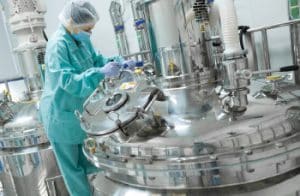
Sterile filtration of drug products is one of the common methods of (cold) sterilisation considered in biopharmaceutical industries worldwide for heat sensitive formulations. It is a critical step in ensuring product sterility and drug safety for patients. Filter qualification and filtration process validations are essential in order to meet safety and regulatory requirements for sterile drugs.
Due to the rise in market demand for biological products, the importance of new filtration systems is increasing, from large apparatus to small single-use filters. Further, the current difficulties in the global supply chain are triggering new opportunities for membranes and filter cartridges from local manufacturers. As a consequence, the need for process-specific up-to-date procedures to properly qualify new filters is becoming more and more critical.
The guidelines currently available, such as PDA TR 26 “Sterilizing Filtration of Liquids”, establish high-level requirements and do not specify test protocols, which are left to the manufacturers’ and testing laboratories’ knowledge and experience. Worst-case conditions with respect to product characteristics and process parameters need to be assessed for each filter validation test. The experimental design should be evaluated and justified on a case-by-case basis, depending on the type of filter membrane, product features, and process conditions. Filter validation studies include testing for:
- Product Wet Integrity
- Chemical Compatibility
- Filter Adsorption
- Bacterial Viability
- Bacterial Challenge or Retention
- Extractables and Leachables
Such tests require highly trained specialists, complex protocols, and different equipment, from LC-MS systems to complex lab-scale filtration apparatus.
Eurofins BioPharma Product Testing, with its multidisciplinary approach and state-of-the-art laboratories, as well as close collaboration with filter manufacturers, provides the necessary expertise and robust testing solutions required by the evolution of new products and filtration processes, together with the high expectations of regulatory agencies. For more information, visit: www.eurofins.com/bpt