GMP next generation sequencing optimally delivers rapid, costeffective results to assure product safety
Marian L. McKee, Ph.D., Vice President, Biosafety BioPharma Testing, Eurofins BioPharma Product Testing, Marian.McKee@BPT.Eurofinsus.com
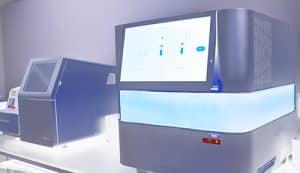
Identity tests are a crucial part of product testing packages submitted to regulatory agencies during the drug development and approval lifecycle. These tests include verifying the identity of plasmids and/or viral vectors that are critical raw materials, drug products (DP), or drug substances (DS) for cell and gene therapy manufacturing. These tests serve to both verify that the gene of interest (or therapeutic gene) has been successfully inserted into the plasmid and/or viral vector and that the inserted sequence is identical to the expected sequence of the inserted gene of interest. These tests are critical prior to releasing the plasmid or viral vector for downstream processes, including manufacturing.
Non-high throughput methods such as Sanger sequencing can be employed, but these are limited in the sequence coverage and depth, which compromises the sensitivity of the assay. Next Generation Sequencing (NGS) is a high throughput platform enabling rapid, cost-effective, parallel sequencing of DNA and RNA. Unlike Sanger sequencing, which analyses one fragment at a time, NGS sequences millions of fragments simultaneously.
NGS is the method of choice for identity testing as it provides the depth and sensitivity that are needed to identify the presence of any variants in a plasmid and/or viral vector nucleotide sequence. NGS also offers the ability for multiplex sequencing where samples can be batched and sequenced simultaneously, saving both costs and time, which is ideal for start-ups. Validated, GMP methods are ideal for release testing.
Eurofins BPT in Lancaster, PA, recently added GMP Sequence Identification Testing (SIT) by NGS to its testing portfolio. The method utilises short read sequencing performed on an Illumina platform. The sequence obtained is compared to a client-provided reference sequence, using bioinformatic analysis to identify any mismatches or variants, including insertions or deletions in the plasmid or viral vector sequence. The GMP method for Sequence Identity Testing has been validated in accordance with ICH Q2 (R2) as an identity method with additional attributes challenge to ensure the robustness of the method for detection of variants.
NGS provides high quality, regulatory-accepted results to assure product safety and accelerate getting key materials into manufacturing and medicines to patients. NGS is part of a complete biosafety program, enabling clients to meet or exceed product milestones and deliver critical therapies to patients faster than traditional methods. For more information, visit: www.eurofins.com/biopharma-services/product-testing/testing-services-by-modality/
EBPT Netherlands implements revolutionary method using mass photometry for accurate and fast quantification of empty, partially filled, and full adeno-associated virus capsids for AAV-based gene therapies
Kassiani Kytidou, Senior R&D Scientist, Kassiani.Kytidou@bpt.eurofinseu.com; Sabine van der Sanden, Head of Department, Viral Safety & Cell Banking, Sabine.vanderSanden@bpt.eurofinseu.com; Eurofins BioPharma Product Testing Netherlands

Adeno-associated viruses (AAVs) are small, non-enveloped viruses with a single-stranded DNA genome. They are increasingly used as vehicles for gene transfer in gene therapies. AAV-based gene therapies have emerged as a novel therapeutic modality in the past few decades, with over 200 clinical trials and six EMA/FDA approved therapies. AAV-based clinical trials target five main therapeutic areas: blood disorders, eye disorders, central nervous system disorders, neuromuscular disorders, and additional disease areas that are still under clinical trials, showing promising results and the significant impact on the patient community.
AAVs are the most promising gene transfer viral vectors that show established long-term gene expression in different tissues. Constant improvements to recombinant AAV cassettes and capsids contribute to optimal gene delivery and successful therapeutic outcomes. However, inconsistency in AAV preparations during manufacturing processes leads to product heterogeneity and negatively affect the gene delivery. Additionally, impurities can influence bioavailability and biodistribution of the particles, potentially causing undesired immunogenic reactions.
To ensure the quality and regulatory compliance of AAV preparations, fast, robust, reliable, and GMP-compliant analytical methods are needed. A revolutionary method using Mass Photometry (MP) is now being implemented for GMP-compliant measurement of empty, full, and partially filled AAV viral particles, to ensure that the product falls within the justified release specifications for the amount of empty or partially filled particles that can impact the therapeutic outcome, as directed by FDA/EMA guidelines. MP is a light scattering-based technique that detects individual, unlabelled molecules in dilute solutions. A single AAV particle, in contact with a glass coverslip, is exposed to a beam of light and produces a small, but measurable light scattering signal. This signal is directly proportional to the particle’s mass. SamuxMP® from Refeyn Ltd. is a mass photometer tailored to the characterisation of AAV particles, using a method/software that is compliant with FDA 21 CFR 11 (US) and EU GMP Annex 11.
Using MP for AAV characterisation (empty/full/partially filled) has many advantages over the orthogonal techniques, such as analytical ultracentrifugation, transmission electron microscopy, and size exclusion chromatography coupled to multi-angle light scattering. These benefits include:
- Following AAV packaging (measurements of all subpopulations) in three stages:
- Vector development stage (packaging efficiency, manufacturability)
- Manufacturing process: optimisation of purification process
- Final QC testing
- Rapid analysis, requiring minimal sample amount (10-20 μL, 1E11 particles/mL) and sample preparation
- Easy measurement with a very low turnaround time (2 min)
- Applicable to all AAV serotypes without method adaptation
Eurofins BioPharma Product Testing Netherlands is now leading the implementation and development of this innovative method under GMP conditions, in accordance with ICH guidelines, to offer it as a new service to customers. For more information, contact us at: info.EBPT-NL@bpt.eurofinseu.com or visit: www.eurofins.nl/bpt.
Eurofins Medical Device Services expands US portfolio with new ethylene oxide sterilisation solution
John Hodges, Senior Business Development Director, Eurofins Infinity Laboratory, john.hodges@bpt.eurofinsus.com
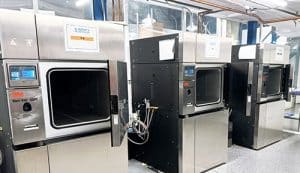
Regularly audited by the FDA and fully cGMP compliant, Eurofins Medical Device Services’ newly acquired San Jose, CA, Ethylene Oxide (EO) Sterilisation site provides high-quality, fast turnaround contract sterilisation and validation services for the medical device industry. Specialising in servicing small-scale sterilisation projects, and adhering to ISO 11135 and CFR 820, the site operates seven 3M GS8X pure EO sterilisers to ensure the elimination of microbial risks for medical devices and their components.
With EO exposure, the preferred modality to sterilise more than 50% of medical devices on the market, Eurofins’ San Jose site provides the necessary support to meet high market demand. The site’s sterilisers have a maximum sterilisation capacity of 8 cubic feet to service a unique niche of medical device sterilisation needs. Noted for quick turnaround times, our experts routinely process R&D and production sterilisation requests in days and turn around full sterilisation validations in weeks.
Eurofins Medical Device Services’ experts work with manufacturers to devise robust sterilisation plans to address potential concerns with unique and potentially temperature-sensitive devices. This is important as the biggest hurdle to overcome in a typical EO sterilisation run is the required use of higher temperatures and humidity. To meet this challenge, Eurofins’ team often performs small R&D testing runs on a small number of devices to test the impact of the conditions before moving to runs with larger batches of devices.
Eurofins’ EO Sterilisation experts work within the new EPA regulations to ensure that more than 99% of EO gas used during sterilisation is removed from any air passing in and out of the lab. For more information, contact: medical-device@bpt.eurofinsus.com
Eurofins CDMO Alphora launches new initiatives to increase green technologies and decrease carbon footprint
Matt Thompson, Senior Manager Analytical Services, matthew.thompson@bpt.eurofinsca.com; Janethe Hubert, Director Analytical Services, janethe.hubert@bpt.eurofinsca.com; Sidra Satti, Marketing Specialist, sidra.satti@bpt.eurofinsca.com; Eurofins CDMO Alphora
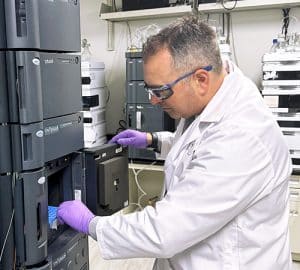
Supercritical Fluid Chromatography (SFC) utilises the special physicochemical properties of carbon dioxide in a liquid state at supercritical pressure for separation of pharmaceutical products and related impurities. The SFC is much faster and more efficient than HPLC, uses shorter columns, and allows wide range variations of eluent polarity by doping with other solvents that increase its utility for efficient separation of various organic compounds. SFC is an environmentally friendly technique as it does not require the use of large volumes of organic solvents. This is most advantageous in prep-SFC compared to prep-LC/HPLC, as it allows material purification and isolation without generating large volumes of organic solvent waste.
An SFC system makes use of compressed liquid CO2 as its primary mobile phase, which enables precise manipulation of mobile phase strength, pressure, and temperature. This ability to finely adjust the system’s resolving power and selectivity provides enhanced control over analyte retention, thereby improving the separation, detection, and quantification of structural analogs, isomers, and both enantiomeric and diastereomeric mixtures—compounds that typically present considerable separation challenges with other methods.
Eurofins CDMO Alphora chose the SFC to resolve routine and challenging separations that require high selectivity and ease of operation. Reversed-phase chromatography generally results in the elution of polar compounds at the beginning, supporting both standard and complex separation difficulties. In contrast, convergence chromatography retains polar compounds and elutes them last, effectively merging the separation efficiency of normal-phase liquid chromatography with the simplicity associated with reversed-phase liquid chromatography.
Eurofins CDMO Alphora recently installed an analytical SFC system (Waters Corporation Acquity UPC2®) that is currently available for analytical and prep-development use. Additional detectors (Mass Spec QDa) are planned for the system, along with qualification for GMP use in 2025. The goal is to increase the number of SFC units, not only to support client needs, but also to decrease carbon footprint in the future, wherever possible. For more information, visit: www.eurofins.com/biopharma-services/cdmo/analytical-services/
Next generation MAT vs. traditional pyrogen tests: faster, ethical, and more reliable
Dr. Nicole Rieth, Business Unit Manager ATMP & Biologics, Nicole.Rieth@bpt.eurofinseu.com; Dr. Frances Reichert, Technical Specialist Biologics, Frances.Reichert@bpt.eurofinseu.com; Eurofins BioPharma Product Testing Munich GmbH
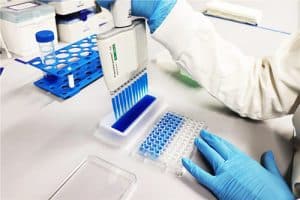
Pyrogens – fever-inducing substances derived from bacteria, fungi, or viruses – pose serious health risks when present in injectable pharmaceuticals and are therefore a critical quality control measure to ensure patient safety. Traditionally, the Rabbit Pyrogen Test (RPT) has been the standard method for detecting pyrogens. However, RPT has raised ethical concerns due to animal use, while also suffering from low sensitivity and a lack of a quantitative measurement. In response to these limitations, the Monocyte Activation Test (MAT) was introduced as an in vitro alternative that mimics the human immune response. Recognised in the European Pharmacopoeia (Chapter 2.6.30) since 2010, MAT is set to fully replace RPT by July 1, 2025.
Eurofins BioPharma Product Testing Munich has evaluated various MAT kits, which assess the immune response using different human cells. While these MAT kits vary in their cell source and detection methods, the underlying principle remains the same: test samples are incubated with pyrogen-responsive cells, such as THP-1 macrophages or peripheral blood mononuclear cells (PBMCs), triggering the release of quantifiable cytokines like IL-6 or TNF-alpha. Eurofins BioPharma Product Testing Munich also had the opportunity to implement a Next Generation MAT kit ahead of its commercial launch. This advanced kit uses a reporter gene cell line, which provides results within a single working day – a significant improvement in efficiency, while maintaining comparable quality and sensitivity to existing MAT solutions.
The MAT offers numerous advantages over traditional methods, making it the superior choice for pharmaceutical safety testing:
- Semi-quantitative, sensitive, and reproducible results
- Detection of endotoxins (LPS) and non-endotoxin pyrogens (NEPs)
- Ethical, animal-free
- Accepted by regulatory bodies (FDA, EMA)
As the transition deadline approaches, pharmaceutical companies must adapt to this regulatory shift. Eurofins BioPharma Product Testing Munich is leading the way in providing state-of-the-art MAT solutions, supporting the industry’s move towards ethical and reliable pyrogen testing. For more information, visit: www.eurofins.de/media/uo3jjqge/monocyte-activation-test-mat.pdf
High throughput spectral shift: an exciting breakthrough in drug discovery
Vanessa Porkolab, Biophysics Director, Eurofins Discovery; Céline Legros, Business Line Leader, Target Validation, Hit Finding & Hitto-Lead; hitfinding@discovery.eurofinseu.com

A novel affinity-based screening method, High Throughput Spectral Shift (HT-SpS), was recently implemented at Eurofins Discovery for Hit Finding programmes. With its unprecedented throughput and
use of direct biophysical measurement, HT-SpS enables the identification of binders that would be missed during conventional High Throughput Screening (HTS). It provides a valuable alternative to Affinity Selection-Mass Spectrometry (AS-MS) and DNA-encoded Library (DEL), making high-throughput, site-agnostic binding approaches achievable with a very small amount of the tested target, no data deconvolution, and with no need for compound multiplexing.
This new method is Eurofins Discovery experts’ latest tool to support clients in the Hit Finding step of their drug discovery journey. Hit Finding, essential to identifying the chemistry starting point for future lead compounds & candidates, can be addressed using several approaches, including HTS, i.e. the screening of hundreds of thousands of compounds in robust and miniaturised assays, allowing the identification of modulators (activators/inhibitors) and site-agnostic binders. Binders play an important role in affinity-based drug discovery because they help identify and optimise potential drug candidates. By understanding how a binder interacts with its target, researchers can design more effective and selective drugs.
HT-SpS is performed using the NanoTemper® Dianthus uHTS, a second-generation screening platform using Spectral Shift technology. Spectral Shift is achieved through dual-wavelength measurements in an isothermal environment. Compared to a conventional activity-based HTS, this affinity-based screening uses the “whole” protein. HT-SpS is highly sensitive and works with a variety of molecular modalities, including fragments, small molecules, peptides, macrocycles, nucleic acids, and degraders, including molecular glues. This provides a highly versatile solution that can support clients working on a wide range of therapeutics. For example, it is ideal for Targeted Protein Degradation research as it helps identify site-agnostic binders that are crucial for developing novel degraders.
Furthermore, HT-SpS requires only hundreds of micrograms of protein for a screening project, maximising resources while maintaining a screening efficiency of 65,000 data points per day. This allows biotech and pharma companies with difficulties in target production to access precision even if they only have a very small amount of protein available. In addition, several protein labeling strategies are possible, depending on the protein construction and target specificity. Eurofins Discovery and Eurofins DiscoverX® have the technologies and expertise in recombinant, soluble, and membrane protein production to meet these challenges.
Thanks to Eurofins Discovery’s expertise in biophysics & HTS and this novel technology, a door has opened to previously unexplored chemical space, enabling the discovery of hits that can lead to groundbreaking advancements in drug development. As the first Contract Research Organisation to offer this revolutionary service, Eurofins Discovery is proud to stay at the forefront of screening technology and rapidly provide early insight into mechanisms of action, as well as to address difficult or undruggable targets. For more information, visit: www.eurofinsdiscovery.com/solution/biophysical-assays
New consulting service complements testing capabilities and provides clients with full range of regulatory compliance solutions
Linda Musitelli, Business Unit Manager, EBPT Consultancy Services, Eurofins Regulatory & Consultancy Services Italy, Linda.Musitelli@bpt.eurofinseu.com

At Eurofins BioPharma Services, we strive to provide our clients with comprehensive solutions that go beyond analytical testing. Eurofins BPT Consulting enhances our offering by providing expert consultancy services that complement our testing capabilities, enabling clients to meet regulatory compliance requirements, optimise processes, and ensure product safety and quality.
Regulatory and compliance challenges require an integrated approach. Companies operating in the biopharma sector must ensure that analytical results align with stringent regulatory requirements. Our consulting services bridge this gap by integrating world-class testing with regulatory strategy, facilitating compliance, and optimising operational efficiency through a comprehensive range of solutions, including:
- Regulatory Compliance and CMC Support: Expertise in dossier preparation, submission strategies, and post-approval compliance. This includes CMC documentation review to support drug development and lifecycle management (CTD, variations, regulatory intelligence).
- Facility and Equipment Qualification: Ensuring GMP compliance through structured validation plans and risk assessments (IQ, OQ, PQ protocols, regulatory compliance).
- Process Validation: Developing robust and reproducible manufacturing processes (E&L strategy, USP 1663-1665, BPOG, cleaning validation, disinfectant qualification).
- Safety and Toxicological Assessments: Assessing impurities, performing PDE calculations, and ensuring safety compliance (ICH Q3A/Q3B, Q3D, nitrosamines, ICH M7, OEL, QSAR, in-silico prediction).
- Environmental Risk Assessment: Identifying and mitigating environmental risks associated with manufacturing activities.
The increasing complexity of regulatory frameworks demands a structured approach to compliance. From early-stage product development to market authorisation and post-approval modifications, Eurofins BPT Consulting provides tailored expertise to navigate the evolving landscape. Eurofins BPT Consulting’s collaboration with Eurofins’ network of laboratories ensures that testing and consultancy efforts are aligned, reducing delays and improving regulatory submission outcomes.
By integrating analytical excellence with regulatory insight, we support streamlined compliance, minimise uncertainties, and help clients bring safe, high-quality products to market. Our combined approach offers:
- A single-source solution for testing and regulatory compliance.
- Faster and more efficient regulatory approvals.
- Enhanced product quality and safety assurance.
- Optimised operational efficiency and risk management.
Learn more about how Eurofins’ consultancy solutions can support your projects at Eurofins BPT Consultancy Services.
First European hub for storage/stability: Eurofins BPT France inaugurates new building, offering 5300 m3 of GMP storage
Hugo Magrin, Business Unit Manager, Hugo.Magrin@bpt.eurofinseu.com; Sylvain Darondel, Business Unit Manager, Sylvain.Darondel@bpt.eurofinseu.com; Eurofins BPT France

The Eurofins BioPharma Product Testing (EBPT) network in France, a global leader in analytical services for the pharmaceutical and medical device industries, inaugurated the extension of its Saint-Augustin site in Corrèze in 2024. This extension concerns a new European center dedicated to stability studies under GMP conditions: STABIOCOR, an acronym for “Stability of Pharmaceutical Bioproduction in Corrèze.” The project, which began in late November 2023, follows a €5 million investment for a 2,100 m² pharmaceutical facility comprising 2,500 m³ of GMP climate-controlled chambers, with the building having been completed in September 2024. It addresses the continuous growth of Eurofins BPT France and will ultimately triple Eurofins’ EU network’s storage capacity, supporting clients in managing product shelf life and tracking medications in real-world conditions through climate-controlled rooms tailored to clients’ specific needs.
The extension includes state-of-the-art equipment to ensure the stability of pharmaceutical products, with 24/7 monitoring and regulation systems equipped with automatic backups. The project is part of a sustainability initiative, featuring a low-energy building equipped with eco-friendly technologies such as a dual-flow ventilation system, heat pumps, and 600 m² of solar panels.
This development also aims to support innovation in sectors such as biotherapies, vaccines, and gene therapies, while strengthening French industrial sovereignty. In addition to its positive environmental impact, the project will boost the local economy by creating more than 20 jobs and establishing partnerships for continuous training in collaboration with local authorities. Supported by the local community, this project reinforces Eurofins BPT’s leadership in logistical innovation and its commitment to sustainable development.
With over 20 years of experience in this field, we can support clients with all projects. Contact us at: FR_BPT_Sales@bpt.eurofinseu.com, or for more information, visit: www.eurofins.com/storage-stability